
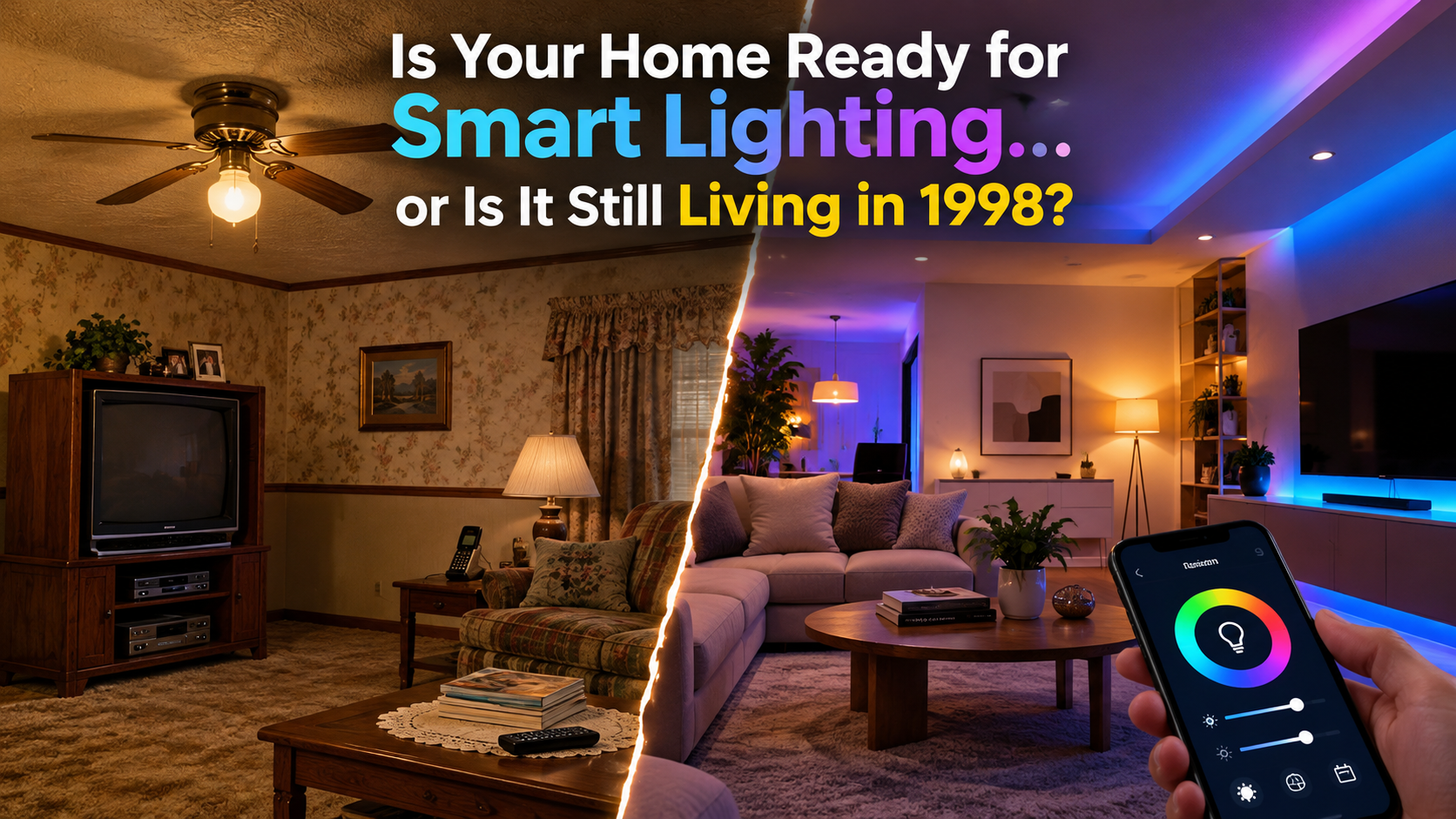
There was a time when “smart lighting” meant remembering to turn the lights off before bed. A noble effort. A simpler age. Today, smart lighting is less Jetsons fantasy and more quietly brilliant adult decision—the kind that saves energy, boosts safety, and lets you control your house without leaving the couch.
But before you start barking commands at your ceiling like a sci-fi captain, there are a few things worth understanding. Because not every home is ready to join the smart revolution without a little prep.
Let’s talk about what actually matters.
Smart Lighting Isn’t Just Fancy Bulbs (Sorry, Bulbs)
Yes, smart bulbs exist. Yes, they’re cool. No, they are not the whole story.
Real smart lighting is about how power, control, and logic work together. It’s the difference between:
- Turning a light on with your phone
- Versus your house knowing when lights should turn on
That second one is where the magic—and the planning—comes in.
Wiring Compatibility: Does Your House Speak “Smart”?
Some homes are born smart-ready. Others… need tutoring.
Older houses may lack:
- Neutral wires in switch boxes
- Proper grounding
- Space for smart dimmers or control modules
That doesn’t mean smart lighting is impossible. It just means there’s a difference between plug-and-play and plan-before-you-buy.
Pro tip: If your house was wired when shag carpet was a lifestyle choice, it’s worth checking before ordering a box of gadgets online.
Control Options: Buttons, Apps, or Full Robot Butler?
Smart lighting can be controlled in a few ways, and none of them are wrong—just different levels of commitment.
- Apps: Great for control, terrible when your phone is upstairs
- Voice control: Convenient, mildly embarrassing when it mishears you
- Automation: The gold standard—lights that turn on, dim, or shut off without being asked
The real question isn’t what’s cool, it’s what fits how you live. A family home, a rental, and a new build all want different answers.
Energy Savings: The Quiet Win
This is the part that doesn’t get enough hype.
Smart LEDs and dimmers:
- Use significantly less power
- Reduce wasted “oops, left the lights on” energy
- Extend bulb life
You may not notice it day to day—but your power bill absolutely will. Smart lighting is one of the rare upgrades that pays rent instead of just looking pretty.
Security: Lights That Lie for You (In a Good Way)
Smart lighting can make it look like someone’s home even when nobody is.
Schedules, motion sensors, and randomization features:
- Deter unwanted visitors
- Improve safety around entrances
- Light paths automatically at night
It’s subtle. It’s effective. And it works even when you forget everything else.
Planning Beats Guessing (Every Time)
The biggest mistake people make with smart lighting is buying gear first and asking questions later.
A better approach:
- Understand your wiring
- Decide how you want to control lights
- Plan zones and usage (not every light needs to be smart)
- Install once, properly
That’s how smart lighting stays smart—and doesn’t turn into a drawer full of unused tech.
So… Is Your Home Ready?
Maybe yes. Maybe almost. Maybe with a little help.
Smart lighting isn’t about showing off—it’s about comfort, efficiency, and control done right. Whether you’re upgrading a single room or planning an entire build, a little planning upfront saves a lot of headaches later.
If you’re in Regina and wondering what your home can actually support, ask the questions now—before your lights start ignoring you.
Because the future is bright. And ideally, it turns on exactly when you want it t